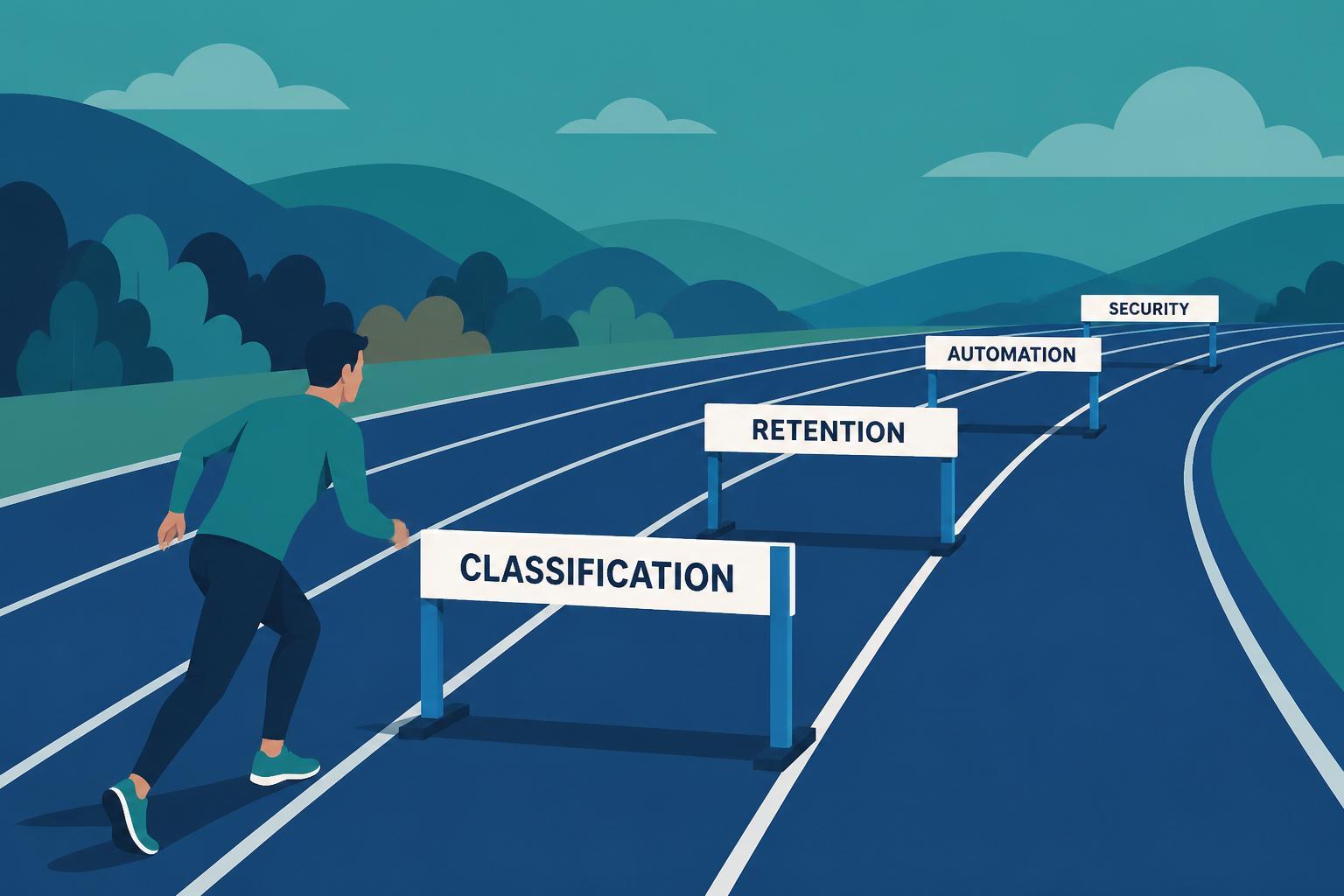
Many believe automation is the solution to records management's biggest challenges. Vendors promise that the right platform will classify documents, apply retention rules, and enforce legal holds without human involvement. Executives are eager to hear it, and budget committees love the efficiency narrative.
Here's the issue: automation doesn't fix a broken taxonomy. It doesn't clarify retention requirements. And it certainly doesn't replace the judgment calls crucial for compliance during litigation.
Why Automation Isn't Enough
Automation amplifies whatever foundation you've built. If your Records Control Schedule lists "miscellaneous business records" with a seven-year retention, your auto-classification engine will tag thousands of documents with that useless category. If your metadata schema doesn't distinguish between draft contracts and executed agreements, no machine learning model will make that distinction for you.
The automation-first approach gets the sequence backward. You need structured thinking before you need structured data. ISO 15489 emphasizes authenticity, reliability, integrity, and usability as core recordkeeping principles. Notice what's missing: speed, efficiency, automation.
These principles require human decisions about what constitutes a record, how long it must be kept, and when exceptions apply. A retention schedule isn't a lookup table. It's a set of business rules that demand collaboration with legal, compliance, and department leads to interpret regulatory requirements and map them to actual work products.
The Evidence
Consider what automation actually requires to work. Your classification engine needs a controlled vocabulary that reflects how your organization creates and uses information. That means a functional classification scheme, not an org-chart Business Classification Scheme that breaks every time you reorganize.
Your retention tracking depends on event-based triggers that humans must identify and record. When does the retention clock start for a terminated employee's personnel file? When they leave, when you complete the exit interview, or when the final paycheck clears? The system can't decide that. You can.
Legal holds expose the limits most clearly. ARMA's Generally Accepted Recordkeeping Principles include accountability, integrity, protection, and compliance. Automation can support these principles by ensuring consistent application and monitoring, but it can't determine whether a three-year-old email thread about a product design falls within the scope of a new product liability suit. That's a judgment call requiring an understanding of both the legal hold notice and the business context.
What to Do Instead
Build your foundation first. Start with a business classification scheme that organizes records by function, not by department. "Human Resources" isn't a record category; "Employee Relations" and "Payroll Administration" are. This structure survives reorganizations and makes retention rules meaningful.
Document your retention decisions with specificity. Don't write "retain per legal requirements." Write "retain three years after employee separation per [specific statute or regulation]." When you implement automation, these clear rules become executable logic instead of vague guidance.
Use automation for what it does well: consistency and tracking. Once you've declared a record and assigned it to the right category, let the system track cutoff dates, send disposition alerts, and enforce access controls. Automate the mechanical work so humans can focus on exceptions.
Implement legal holds manually at first. Yes, it's slower. You'll learn which custodians understand what you're asking for, which search terms capture relevant records, and which systems contain information your Records Control Schedule didn't account for. That knowledge makes your eventual automated hold process actually work.
Train staff on the "why" before you train them on the "how." People who understand that retention rules exist to balance legal defensibility against storage costs will make better decisions about what to keep. People who just click buttons in a content services platform won't.
When Automation Is Essential
Automation becomes essential at scale. If you're managing records across multiple jurisdictions with different retention requirements, human tracking fails. If you're processing legal holds for hundreds of custodians, manual workflows create unacceptable risk.
The key is timing. Automate after you've proven the process works manually. After you've refined your taxonomy through actual use. After you've identified the edge cases that need human review.
Automation also excels at audit trails. Once your retention schedule is solid, automated tracking creates the documentation you'll need when regulators ask how you ensure compliance. Fixity checks, access logs, and disposition certificates all benefit from systematic enforcement.
And yes, automation reduces human error in repetitive tasks. Applying the same retention rule to 10,000 similar documents? Let the system do it. But defining what makes those documents similar enough to share a retention rule? That's still your job.
The vendors aren't wrong that automation transforms records management. They're just wrong about what needs transforming. Fix your classification, clarify your retention rules, and train your people. Then automate the execution. Not before.
Your Records Control Schedule doesn't fail audits because it lacks automation. It fails because the rules are ambiguous, the taxonomy is inconsistent, or the staff doesn't understand their obligations. Automation won't fix any of those problems. It'll just help you fail faster.